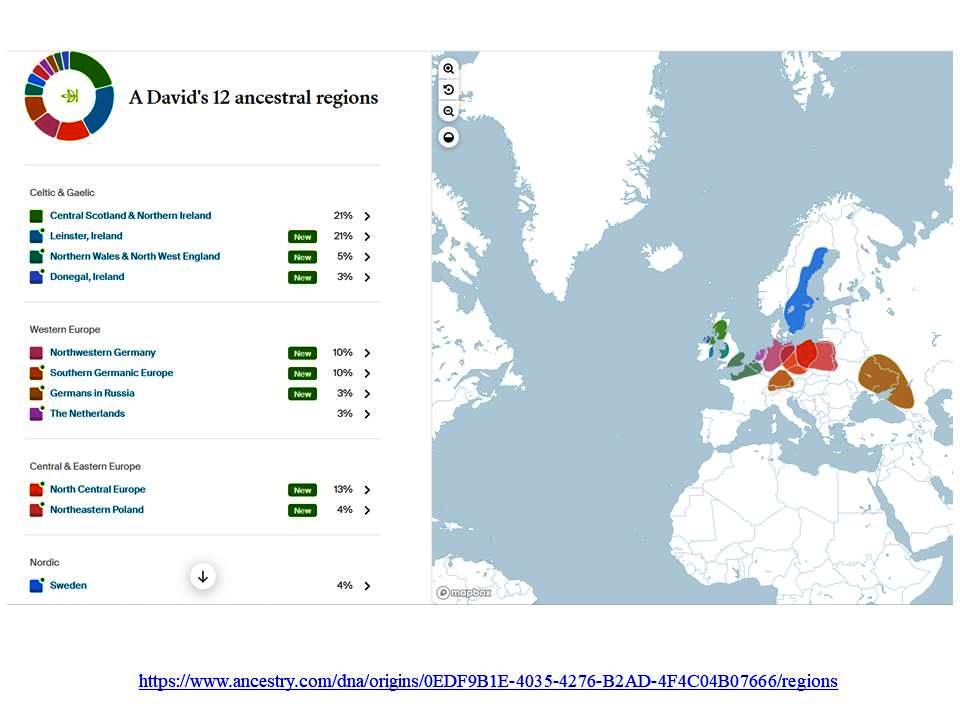
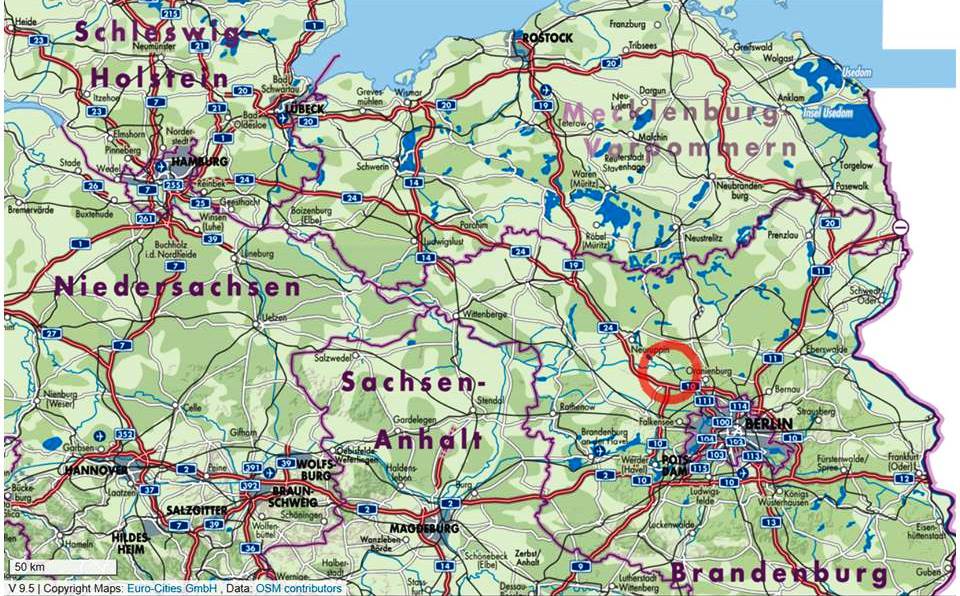
The surname Mangelsdorf dates back to the medieval period in Europe. Initially, it was common to use given names or descriptors to identify people, but as populations grew, the necessity for more specific identifiers led to the establishment of family names. In this context, Mangelsdorf would have been used to denote families originating from a certain village known for its agricultural practices. The Mangelsdorf name is linked to the region between the Havel and Elbe rivers, where villages named Gros Mangelsdorf and Klein Mangelsdorf were established in the 14th century. The family has a history of craftsmanship in the Brandenburg-Berlin area since the 1700s.
The surname underwent various transformations in spelling and pronunciation, reflective of the linguistic variations across regions and the influence of different dialects in Germany. During migration periods, particularly in the 19th and early 20th centuries, many individuals and families with the surname Mangelsdorf emigrated to various countries, particularly to the United States. This migration contributed to the diversification of the name, with some branches developing new spellings or adaptations. During the early 1800s in Germany, the family name was frequently spelled with one f; when they came to the States, an additional f was added.
A Mangelsdorf family crest is reported in Deutsche Wappenrolle, 1974 (enrolled September 16, 1973 under number 676873). It was submitted by Fredrich Karl Mangelsdorf for descendents of the paternal line of Andreas Christian Friedrich Mangelsdorf (1826-1880). The crest details state: the silvery-red-black tinged shield is divided in two by a toothed japped/zig-zag line and in each section a golden "crown-bloom." On the helmet, there are black and silver covers on the right side, and red-black on the left; between a silver-black on the right, and red-black on the left jagged line, both sides with a golden "crown flower," and a golden rose on the stern.
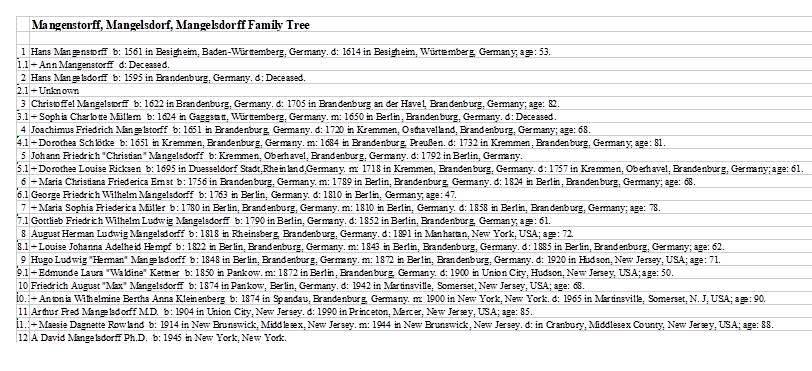
Church registers recording family christenings and marriages were examined in tracing my paternal roots in the Brandenburg area of Germany with the assistance of Markus Rohling, Mangelsdorffs lived and worked in the Berlin area as craftsmen since the 1700s according to the city directories, in Kremmen during the late 1600s, and 1500s in the city of Brandenburg. In the 1880s, the Mangelsdorffs immigrated to the New York area. My paternal roots follow: Kleine(n)berg, Kettner, Hempf, Muller, Ernst, Joseph, Tifft/(Tefft), and Day.

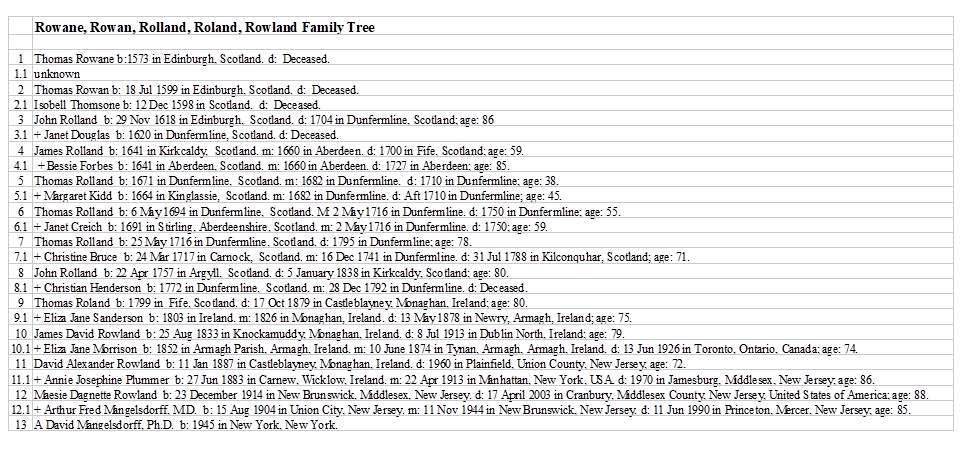
The Rowane surname comes from Scotland (Lowland) and from Ireland (Galway) to Ireland (Ulster), America and Canada. The early Scottish Rowans reflected more than one origin of the name. It has been mainly a Scottish Lowland name, found principally in the Glasgow/Ayrshire coastal areas. Rowans were prominent in the Govan community of Scotland from the 1600s onwards.
The Rowland surname comes from the Norman name Rol(l)an, which derives from the Germanic elements "hrod," meaning "renown," and "land," meaning "territory." Much of the Medieval popularity of this name was as a result of Roland (d. 778), a Frankish military leader under Charlemagne who was defeated at the Battle of Roncevaux Pass in 778.
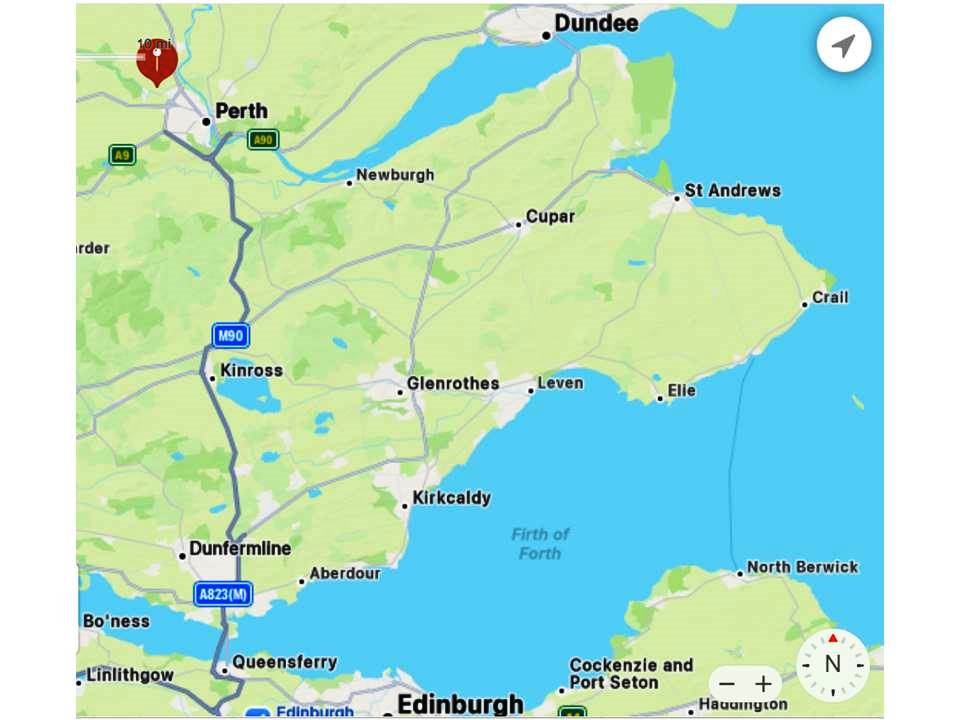
The migration from Scotland to Ireland may have been part of the Scottish clearances. My maternal roots also follow: Douglas, Forbes, Kidd (of Scotland), Plummer, Sanderson, Morrison, and Little.
I have created a Virtual Cemetery hosted on Find-A-Grave for family, friends, and Dartmouth classmates. Come visit.